Enterprise product systems
Enterprise product systems under operational pressure
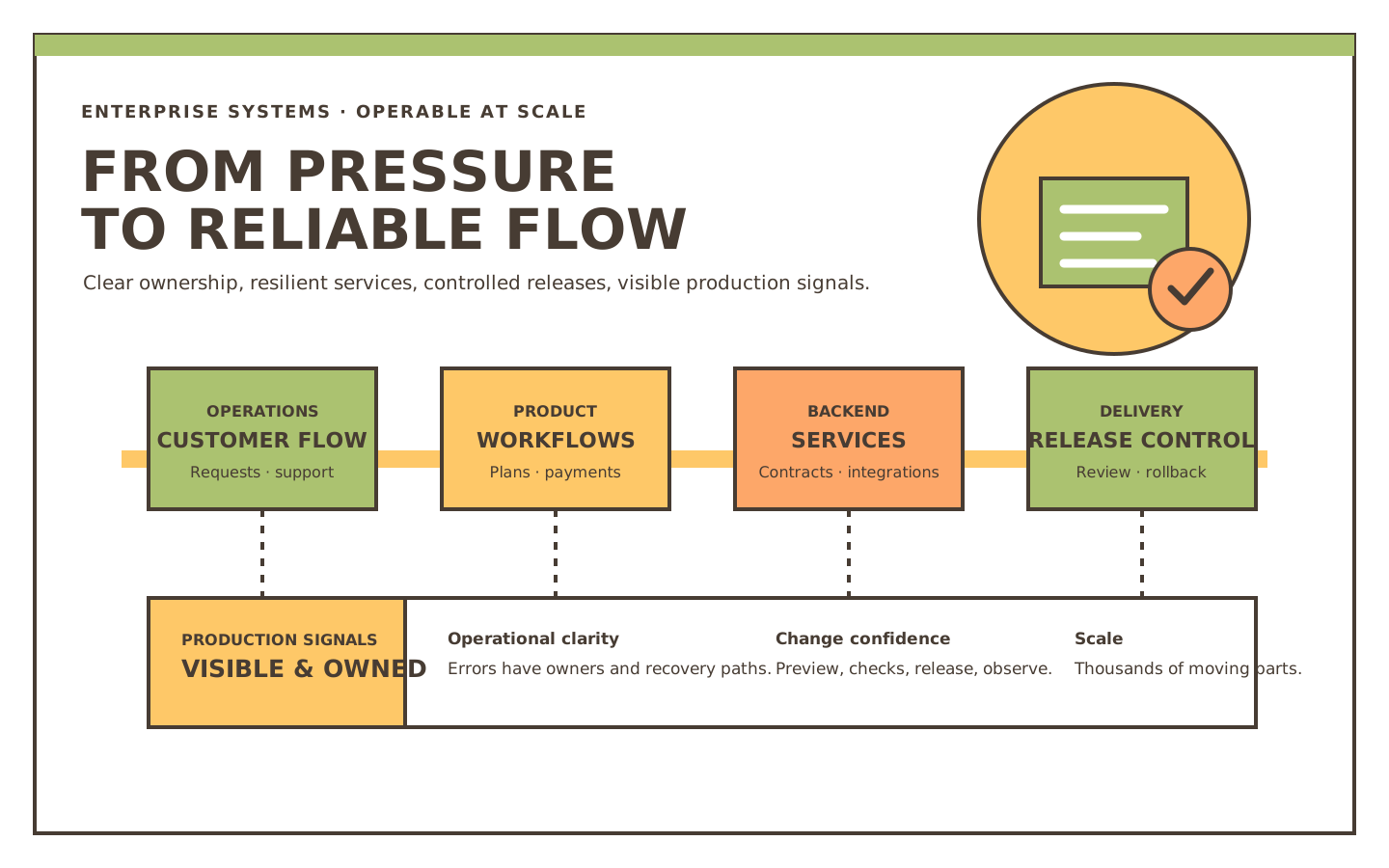
An internal customer-support and account-recovery operations platform and mission-critical emergency-response software for a large US city show how product workflows, performance, observability, and delivery operate inside complex organizations.
Opportunity & outcome
Opportunity
Large systems create meaningful opportunities when ownership, integrations, operational workflows, and support paths are made visible.
Business outcome
The customer-support and account-recovery platform improved from approximately 3–5 seconds to under 1 second. Emergency-response workflows supported high-stakes dispatch where reliability and precise interaction mattered.
Role & system
Role
In financial technology: stakeholder communication, roadmap and workflow definition, frontend depth, server-side and API work, observability, backend-oriented delivery, and Java work in progress. Earlier emergency-response work focused on custom keyboard dispatch and rigorous testing.
Design considerations
Scale, integration design, data sensitivity, cross-team ownership, and production continuity shaped every decision.
Decisions
Architecture decisions
Work from the business workflow backward, isolate risky integration points, keep operational contracts explicit, and favor maintainable backend paths over clever one-off fixes.
Delivery
Execution highlights
Selected work includes payment-plan workflows, cashback implementation, customs handling, escalation ownership, and backend delivery across complex organizational contexts.
Quality, security, and performance
The work depends on careful change management, production awareness, data sensitivity, clear handoffs, and testing around workflows where mistakes become operational risk.
Client details remain private.